Breast Soreness Early Pregnancy: What It Means & How to Ease the Discomfort
Medically reviewed guidance for first-trimester breast tenderness
Breast soreness early pregnancy is often one of the very first physical signs of conception. From nipple tenderness to fullness and sensitivity, here’s what’s normal, why it happens, and how to manage it safely.
Breast Soreness Early Pregnancy – Causes & Relief Guide
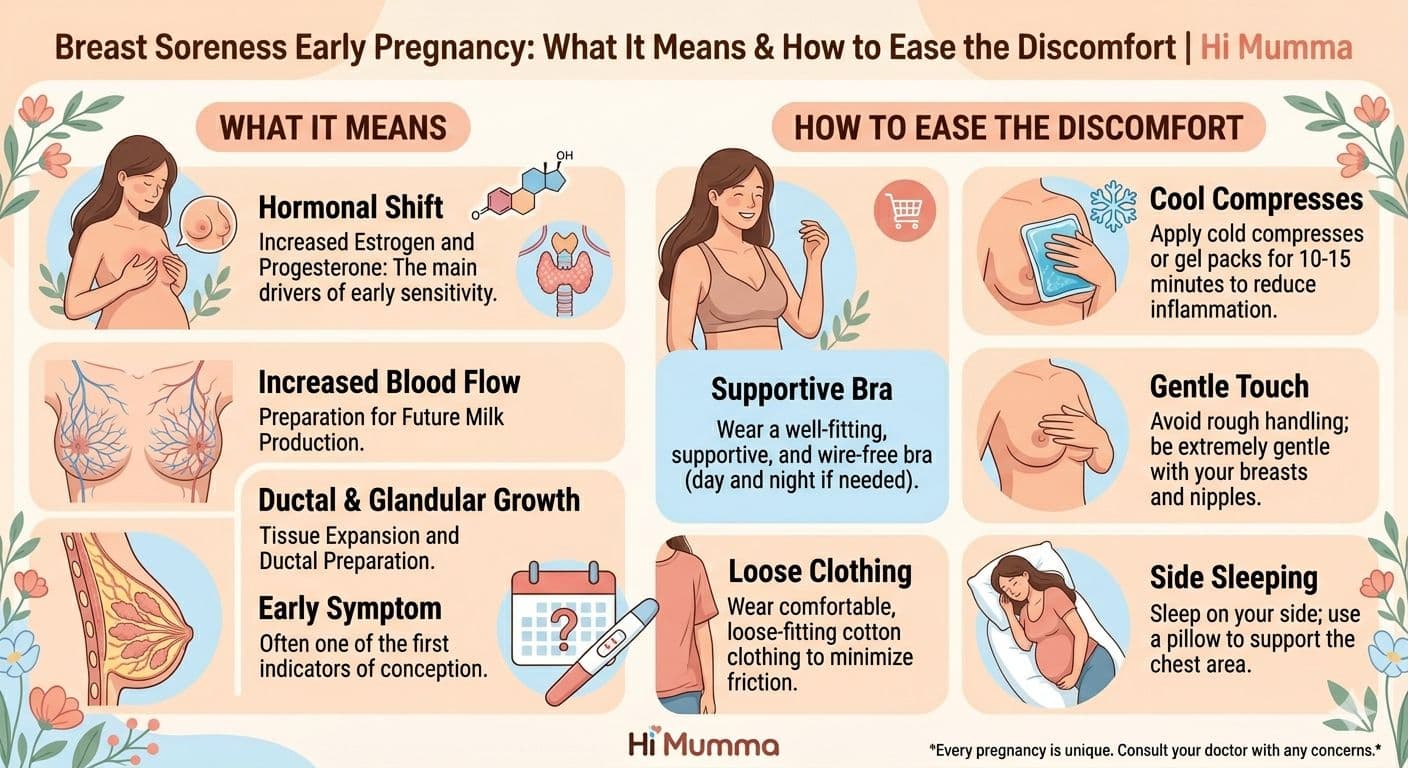
What Is Breast Soreness Early Pregnancy?
Breast soreness early pregnancy refers to breast tenderness, swelling, heaviness, or nipple sensitivity that occurs within the first few weeks after conception. It is caused mainly by rising levels of estrogen and progesterone, which prepare the breasts for milk production.
According to the Mayo Clinic and the American College of Obstetricians and Gynecologists (ACOG), breast tenderness during early pregnancy is among the most common first-trimester symptoms.
Why Does Breast Tenderness During Early Pregnancy Happen?
Hormonal and structural changes begin almost immediately after implantation:
- Rapid rise in estrogen increases blood flow to breast tissue.
- Progesterone stimulates milk gland development.
- Increased sensitivity of nerve endings causes early pregnancy nipple pain.
- Fluid retention makes breasts feel heavy or swollen.
- Darkening and enlargement of areola as preparation for breastfeeding.
Common Tender Breasts Pregnancy Symptoms
Every woman experiences symptoms differently, but these are most reported:
Nipple Tenderness
Nipple tenderness in early pregnancy can make even light fabric uncomfortable.
Fullness & Heaviness
Breasts may feel fuller due to increased blood supply.
Visible Veins
Blue veins may appear more noticeable under the skin.
Sensitivity to Touch
Even mild pressure can feel intense in the first trimester.
Breast Tenderness: PMS vs Early Pregnancy
Many women confuse tender breast meaning in pregnancy with premenstrual changes.
| Feature | PMS | Early Pregnancy |
|---|---|---|
| Duration | Stops with period | Continues & increases |
| Intensity | Mild to moderate | Often stronger |
| Areola Changes | Usually no major change | Darkening & enlargement |
| Vein Visibility | Rare | Common |
How to Manage Breast Tenderness While Pregnant
Safe, doctor-recommended relief strategies:
- 1Wear a supportive, soft maternity bra.
- 2Use breathable cotton fabrics to reduce friction.
- 3Apply warm compresses for comfort.
- 4Sleep with upper-body support to reduce pressure.
- 5Avoid harsh soaps around the nipple area.

Support Makes a Big Difference in Early Pregnancy
Many moms tell us that small comfort tools reduce daily discomfort during breast soreness early pregnancy. Hi Mumma’s trimester-based Pregnancy Care Kits include soft sleep support pillows, calming night lamps, silk pillowcases, and stress relief tools that help reduce body pressure and improve rest during sensitive weeks.
Instead of guessing what she might need, trimester-specific kits ensure support evolves as symptoms change.
When to See a Doctor
Contact your healthcare provider if you notice severe one-sided pain, redness, fever, discharge unrelated to pregnancy changes, or a distinct lump. While breast tenderness during early pregnancy is normal, unusual pain should always be evaluated.
Frequently Asked Questions
It can begin as early as 1–2 weeks after conception due to rising estrogen and progesterone.
Yes. Increased blood flow and hormonal sensitivity make nipples more reactive.
It is most common in the first trimester and often reduces in the second trimester.
No. PMS and hormonal fluctuations can also cause tenderness.
Mild warmth is generally safe, but avoid high heat and consult your provider if unsure.
Gentle Support for Every Trimester
Discover research-backed Pregnancy Care Kits designed to support comfort, sleep, and emotional well-being from week 1 onward.
View Care KitsThis article is for informational purposes only and does not replace medical advice. Always consult your doctor or midwife regarding pregnancy symptoms. Medically reviewed in accordance with guidance from WHO, Mayo Clinic, and ACOG.
More in Symptoms
- Early Pregnancy Changes in Breast (Weeks 1–12)
- Itchy Breast During Pregnancy: What’s Normal & What’s Not
- Leg Cramps During Pregnancy: Why They Happen & How to Get Relief
- Nipple Discharge During Pregnancy: What’s Normal, What’s Not & When to Call Your Doctor
- Tender Breast Before Period — Is It a Sign of Pregnancy?