Understanding Your Pregnancy Due Date (EDD Explained)
A calm, evidence-based guide for expectant mothers
Your pregnancy due date is a helpful milestone—not a deadline. Here's how it's calculated, what it really means, and how to use it for planning and peace of mind.
Pregnancy Due Date (EDD Explained) – How It’s Calculated
Calculate Your Pregnancy Due Date Instantly
Accurate, doctor-approved pregnancy due date calculator
Due Date Calculator
Enter the first day of your last menstrual period to estimate your due date.
Why due dates matter
A due date gives you and your care team a shared reference for your pregnancy timeline. It helps with scheduling scans, planning leave, and understanding which week you're in.
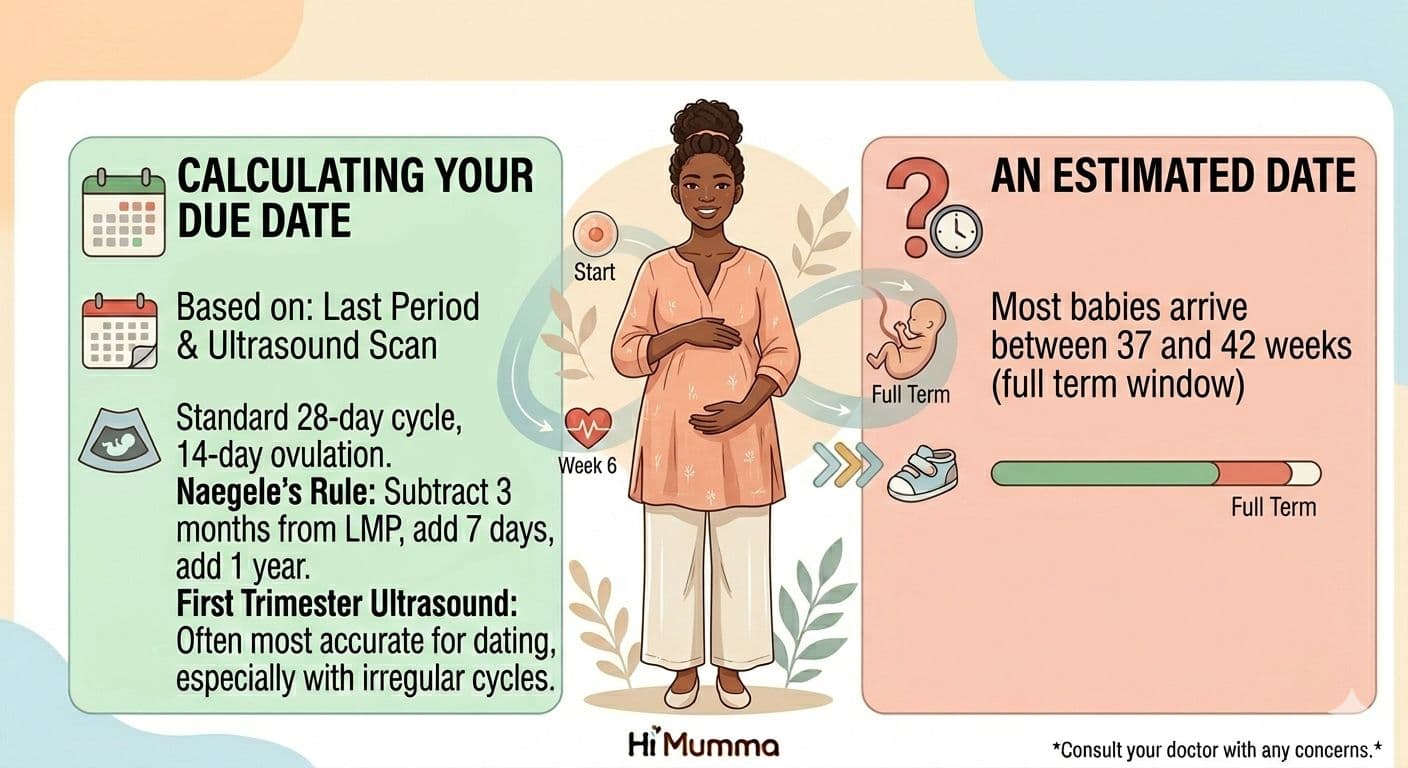
It's usually based on the first day of your last menstrual period (LMP) or an early ultrasound. Only a small percentage of babies arrive exactly on their due date—and that's completely normal.
Using a due date calculator with confidence
A due date calculator is one of the most common tools people use in early pregnancy. Whether you're trying to calculate my due date pregnancy for the first time or checking dates after a scan, a reliable pregnancy due date calculator gives you a clear starting point.
Most tools work as an estimated due date by LMP calculator, meaning they calculate 40 weeks from the first day of your last menstrual period. This approach is widely used in clinics and forms the basis of many maternity due date calculator and delivery due date calculator tools you'll find online.
Whether you're using a pregnancy and due date calculator or an expected due date of delivery calculator, remember: it helps estimate pregnancy due date—it doesn't predict the exact day your baby will arrive.
How accurate is an expected due date of delivery?
Your expected due date of delivery is often called the EDD (Estimated Date of Delivery). An accurate due date calculator provides a medically accepted estimate, but only a small number of babies are born on that exact date.
Most pregnancy due date predictor tools begin as an estimated due date by LMP and may later be refined using ultrasound findings—especially if cycles are irregular or dates are uncertain.
Whether you use a pregnancy due date calculator or discuss it with your care provider, the goal is to understand your pregnancy due date well enough to plan care, scans, and support—while staying flexible about when labour actually begins.
Key things to know
A few simple ideas can make the due date feel less stressful and more useful.
It's an estimate
Most babies arrive within two weeks before or after their due date. Think of it as a helpful midpoint, not a fixed day.
LMP is the usual start
If you have regular cycles, your due date is often calculated as 40 weeks (280 days) from the first day of your last period.
Ultrasound can refine it
An early ultrasound may be used to adjust your due date if your cycles are irregular or LMP is uncertain.
How due dates are typically calculated
Different methods are used depending on your situation:
- 1LMP method: first day of last period + 280 days (40 weeks).
- 2Ovulation or fertility tracking: ovulation date + 266 days.
- 3IVF: transfer date plus a fixed number of days depending on embryo stage.
- 4Early ultrasound: measurements such as crown–rump length to estimate gestational age.
Terminology at a glance
Quick reference for common terms you might see in your notes or apps.
| Term | Meaning |
|---|---|
| EDD | Estimated date of delivery (due date) |
| LMP | First day of last menstrual period |
| Gestational age | Weeks and days since LMP |
| Trimester | First (1–12), second (13–26), third (27–40) weeks |
Tip
Use our pregnancy due date calculator to get an estimate in seconds. Then review it with your healthcare provider—especially if your expected due date of delivery changes after a scan.
Frequently asked questions
Yes. If your cycles are irregular or an early ultrasound suggests a different gestational age, your care provider may adjust your due date. This is common and helps guide care.
An early ultrasound can estimate how far along you are and provide a working due date. Your doctor or midwife can guide you.
Many healthy pregnancies go past 40 weeks. Your care team will monitor you and discuss next steps if needed.
An EDD calculator due date tool estimates your expected due date of delivery using your last menstrual period, ovulation date, or early ultrasound data.
Want personalised support?
Our trimester-based care kits are designed to match your stage—so you have what you need, when you need it.
Explore care kitsThis article is for general information only and does not replace advice from your doctor or midwife. Always follow the guidance of your healthcare provider.