Nipple Discharge During Pregnancy: What’s Normal, What’s Not & When to Call Your Doctor
Evidence-based guidance for expecting mothers and partners
Nipple discharge during pregnancy is common, especially in the second and third trimesters. Learn what causes it, what discharge colors mean, and when medical review is necessary.
Nipple Discharge During Pregnancy – Colors, Causes & Sensitivity Guide
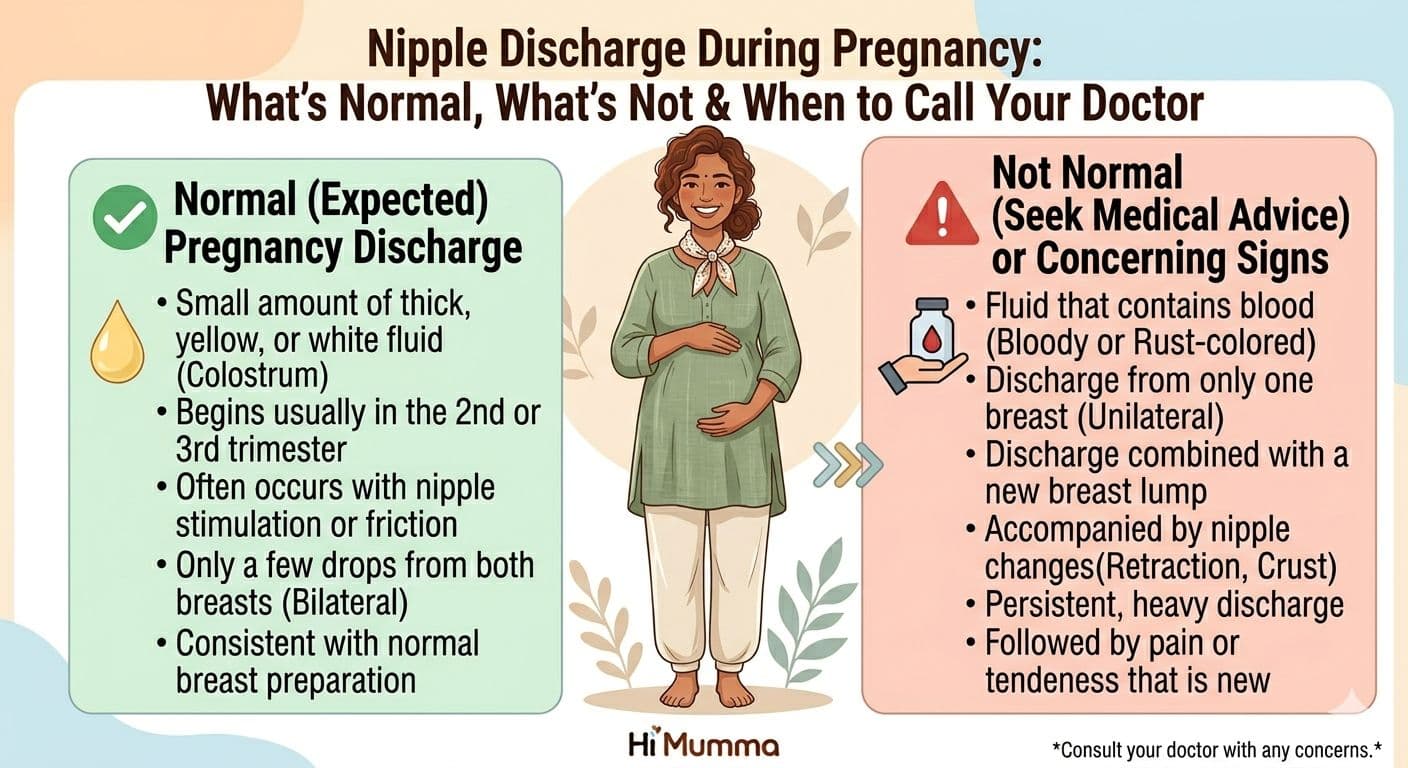
Definition: Nipple Discharge During Pregnancy
Nipple discharge during pregnancy refers to fluid that leaks from one or both nipples due to hormonal stimulation and early milk (colostrum) production. It is typically thin, milky, yellow, or clear and is most common after the first trimester as the breasts prepare for breastfeeding.
Is Nipple Discharge While Pregnant Normal?
Yes. According to clinical guidance from the American College of Obstetricians and Gynecologists (ACOG) and educational resources from Mayo Clinic, nipple discharge while pregnant is usually a normal physiological response to rising estrogen and prolactin levels.
Studies suggest that approximately 40–70% of pregnant women experience some form of nipple discharge before delivery, particularly in the second and third trimester. First-time mothers often notice it slightly earlier due to heightened tissue sensitivity.
Average Percentage of Women Experiencing Nipple Discharge by Month
Estimates based on obstetric surveys and clinical observations:
| Pregnancy Month | Estimated % Experiencing Discharge |
|---|---|
| Month 1–2 | 10–15% |
| Month 3–4 | 25–35% |
| Month 5–6 | 45–55% |
| Month 7–8 | 60–70% |
| Month 9 | 65–75% |
Average Percentage of Women Experiencing Nipple Sensitivity by Month
Nipple sensitive pregnancy symptoms are even more common:
| Pregnancy Month | Estimated % With Sensitivity |
|---|---|
| Month 1–2 | 65–80% |
| Month 3–4 | 70–85% |
| Month 5–6 | 60–75% |
| Month 7–8 | 50–65% |
| Month 9 | 40–55% |
Nipple Discharge Color: What It Means
Color can vary depending on stage and hormone levels:
- Clear: Early hormonal stimulation before colostrum thickens.
- Creamy white: Early milk production.
- Yellow or golden: Colostrum (very common in second/third trimester).
- Sticky or thick: Concentrated colostrum.
- Light pink or brown: Minor blood vessel rupture (usually harmless but should be monitored).
- Green or foul-smelling: May indicate infection — requires medical evaluation.
Average Timing
Most women who experience nipple discharge during pregnancy first notice it between weeks 16–28. About 30% report it earlier (before 16 weeks), and around 20% only notice discharge close to delivery.
First Pregnancy vs Subsequent Pregnancies
Clinical observations suggest differences:
First-Time Mothers
Around 55–60% report noticeable discharge. Sensitivity tends to feel stronger due to tissue changes.
Second or Later Pregnancy
Up to 70–75% may experience earlier or more frequent discharge because milk ducts were previously stimulated.
Right, Left, or Both?
Distribution patterns among women:
- Both breasts: 70–80%
- Right only: 10–15%
- Left only: 10–15%
Management Tips for Nipple Discharge & Soreness
Safe, OB-approved strategies:
- 1Wear breathable cotton bras with light padding.
- 2Use breast pads if leakage is frequent.
- 3Avoid frequent squeezing or stimulation.
- 4Apply lanolin-based nipple cream for soreness.
- 5Stay hydrated to support skin elasticity.
- 6Avoid harsh soaps around nipple area.
Is Nipple Discharge a Sign of Labor?
No. Nipple discharge during pregnancy is not a reliable sign of labor. While colostrum production increases closer to delivery, discharge alone does not indicate that labor is imminent.
When to See a Doctor
Seek medical care if discharge is bloody, green, foul-smelling, occurs from only one duct persistently, is accompanied by fever or breast pain, or if you feel a lump. These symptoms require prompt evaluation.
Myths vs Facts
Separating fear from science:
| Myth | Fact |
|---|---|
| Nipple discharge means labor is near. | It does not predict labor timing. |
| Discharge is always a problem. | Most discharge is normal hormonal response. |
| You should squeeze nipples to check milk. | Excessive stimulation can trigger contractions. |
What Major Medical Organizations Say
The World Health Organization emphasizes breast changes as a natural preparation for infant feeding. Mayo Clinic notes that colostrum leakage is common in later pregnancy. The American College of Obstetricians and Gynecologists advises evaluation only when discharge is abnormal in color, smell, or accompanied by pain.
Frequently Asked Questions
Yes, up to 70% of women experience some discharge before delivery.
Hormonal changes increase blood flow and nerve sensitivity, causing soreness.
Yes, sensitivity often begins in the first trimester and may peak early.
This article is for informational purposes only and does not replace medical advice. Always consult your OB-GYN for personalized pregnancy care.